Era Pickleball coaching: The Coach-Athlete Partnership
Every athlete arrives at the court with a different story, a unique set of strengths, and a handful of stubborn habits. In pickleball, those personal fingerprints show up as much in footwork and shot selection as in the way a player interprets feedback from a coach. The Era Pickleball coaching approach centers on a stable partnership between coach and athlete, built on trust, honest communication, and a shared commitment to growth. This is not a one size fits all program. It is a dynamic relationship that changes with skill level, goals, and even the day’s energy. When done well, it turns practice into a precise craft and competition into an extension of training rather than a separate arena of stress.
From the perspective of someone who has taught players from weekend enthusiasts to tournament regulars, the coach-athlete partnership looks different in every gym, every court, and every pickleball class Era Pickleball offers. Yet some core principles stay constant. The coach acts as a guide, a verifier of effort, and a strategist who translates intent into actionable steps. The athlete, in turn, commits to enough self reflection and effort to make the plan real. Together they navigate the week’s training, adjust after a hard match, and cycle back to the fundamentals when technique drifts under fatigue or pressure.
A well designed coaching relationship begins with clarity. The athlete knows what success looks like for this phase of development. The coach knows what levers to pull to create consistent progress. The shared understanding reduces the friction that often accompanies feedback, turning corrections into opportunities rather than sources of embarrassment. In Era Pickleball, this clarity is not a single conversation but a living agreement that evolves through time, much like a good rally evolves across the court.
What follows is a practical map for cultivating a robust coach-athlete partnership in pickleball. It blends concrete tactics with the human touch that turns practice into progress.
The scaffolding of trust
Trust starts on day one, but it deepens with repeated positive experiences. A coach who communicates with specificity creates a sense of safety. When a player knows exactly what a drill is meant to achieve and how performance will be judged, pressure eases. Trust is reinforced by reliability. If the coach promises a certain analysis after a drill, that feedback arrives in a timely, actionable form. If the athlete commits to arriving early for warmups, they see a consistent pattern in the coach’s response to effort and preparation.
Trust also grows through vulnerability. The coach shares the rough edges of their plan and the momentary uncertainties that come with a new technique. The athlete, in turn, reveals what feels confusing or unusually taxing. This honesty is not a sign of weakness but a commitment to the truth of the game. It allows adjustments to be made without the fear that a mistake will derail progress. In practice, trust translates into a smoother exchange of information and a more productive relationship overall.
Clear goals and realistic milestones
A season or even a quarter of training benefits from an explicit destination. The coach and athlete collaborate to define outcomes that matter—improved serve accuracy, faster transition between the non volley zone and the kitchen, better decision making under pressure. The key is to pair ambitious targets with milestones that are realistically attainable within the available training time. When a goal feels out of reach, the plan becomes unclear and motivation can waver.
Milestones function like checkpoints on a map. They give both parties a way to measure progress between sessions and to adjust the route when needed. For example, a milestone might be achieving a certain percentage of first serves in or reducing unforced errors in baseline rallies by a fixed amount over six weeks. These benchmarks are not punitive marks but a way to quantify improvement and celebrate small wins that compound over time.
The language of feedback
Feedback is the engine of growth. In Era Pickleball coaching, feedback is specific, immediate, and contextual. It should connect to a visible outcome on the court rather than being abstract commentary. The most effective feedback introduces a precise cue or a tangible drill that the player can execute in the next rally. A good cue might be a reminder to shift weight into the stepping foot before a forehand or a prompt to watch the ball to contact rather than rush the stroke.
Feedback has a cadence. Short, actionable notes during practice can guide a rally’s next shot, followed by a reflective debrief after a drill or match. That debrief might highlight what went right, what caused the error, and what the plan is for the next session. When feedback is frequent but targeted, it becomes a habit rather than a nagging voice. Athletes begin to anticipate the coach’s observations and self correct between sessions, which is the ultimate sign of learning.
The practice design philosophy
High quality practice is not about repeating the same drills endlessly. It is about purposeful variation that challenges the athlete and mirrors the demands of competition. In Era Pickleball coaching, practice design begins with the end in mind. If the objective is to tighten the transition from the baseline to the kitchen, the session should feature scenarios that force that movement while maintaining control. Drills are layered, moving from fundamental technique to decision making under pressure. The coach sequences activities so that success in one segment paves the way for the next.
In practice design, the realistic constraints of time, space, and equipment matter. A typical session balances technical work, tactical drills, and physical preparation. It uses court space efficiently, rotates players to maximize reps, and ensures that rest intervals support quality practice rather than fatigue.
The role of data and feel
Data can be a helpful guardrail, but it must be paired with human judgment. Ball speed, rally length, and serve accuracy provide tangible metrics that anchor conversations about progress. However, numbers do not tell the whole story. The feel of a stroke, the rhythm of a rally, and the sense of balance during a shot carry crucial information about technique that only a skilled observer can interpret.
Era Pickleball coaches often rely on video review, slow motion analysis, and in the moment observations to triangulate a player’s performance. When players see their own movement, the coaching becomes less about tell and more about guide. The best partnerships use data to corroborate what the eye sees and to reveal subtle patterns that might otherwise stay hidden. The athlete learns to trust the coach’s interpretation and to use that interpretation to refine practice habits.
Strength, conditioning, and movement literacy
Developing a solid base of movement literacy is essential for longevity in pickleball. A coach who understands biomechanics can tune a player’s footwork, hip rotation, and shoulder stability to suit court coverage and shot selection. Strength and conditioning are not about brute force. They are about resilience and efficiency. The Era Pickleball approach emphasizes mobility, proprioception, and the ability to recover quickly between points.
A well rounded program includes warmups that prime the joints for lateral movement, drills that build core stability for balance in dynamic shots, and cooling routines that support recovery. Conditioning is integrated into practice rather than treated as a separate block. On days with short windows, the coach might weave conditioning into movement drills, keeping the focus on technical improvement while still delivering a physiological stimulus.
Communication as the through line
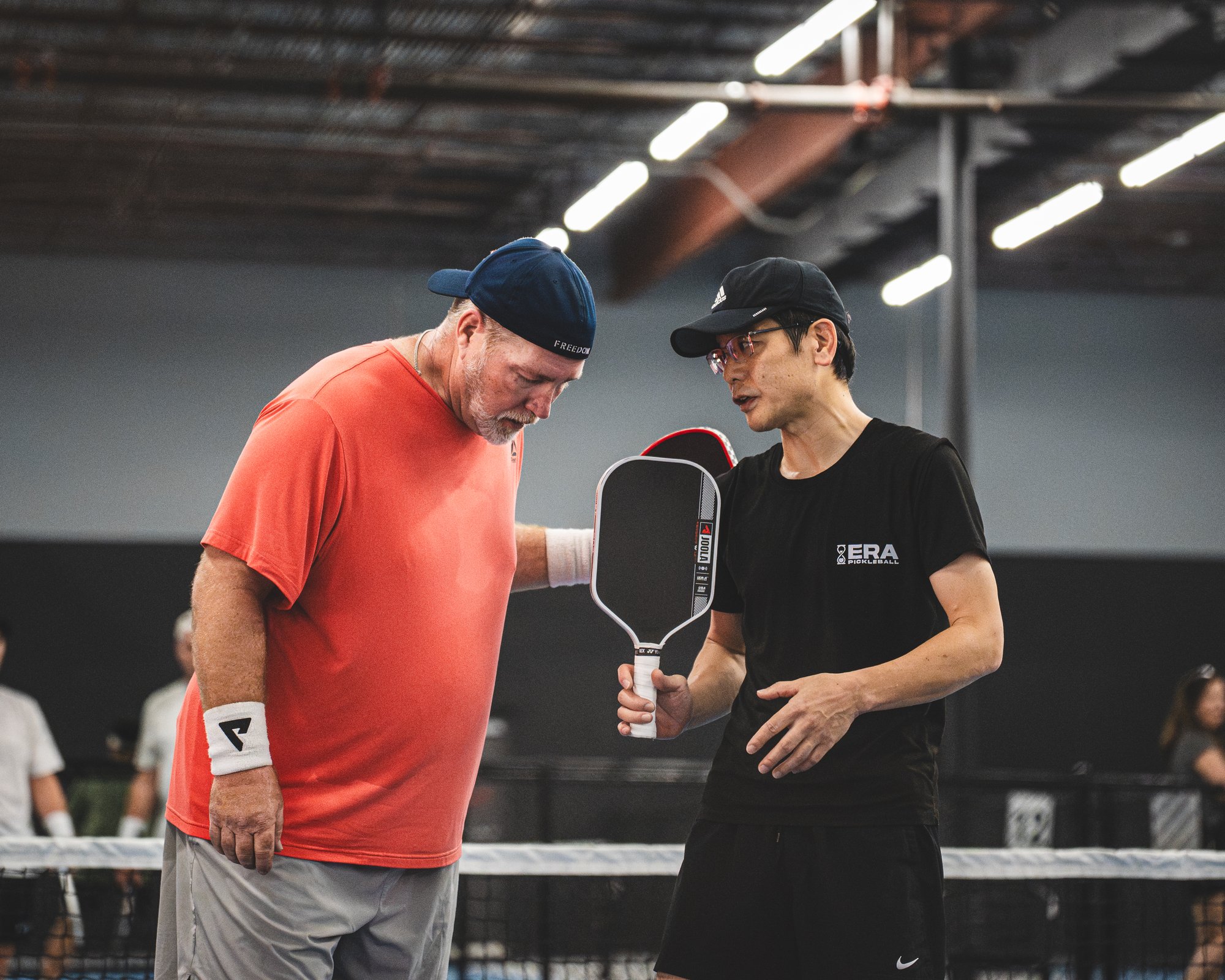
The heart of the coach-athlete partnership is communication that feels earned rather than obligatory. It requires listening as much as speaking. A coach who listens can sense when a player is masking frustration or fatigue. A player who speaks openly about a mental block or a misread on a serve helps the plan stay aligned with reality. The best relationships in pickleball coaching are characterized by a shared language, a set of cues that both parties understand, and a rhythm that makes feedback feel like collaboration rather than correction.
Real world results
The proof of an effective partnership is visible on the court, in the way a player reads a point and makes a decisive choice under pressure. In practice, that means sharper court position after a crosscourt dink, smarter shot selection in midgame, and a more reliable ability to reset after a long rally. It also means the athlete feels more confident stepping onto a new court or facing a tougher opponent. Confidence built on consistent, practical progress is the most enduring form of performance enhancement.
The coach's responsibility is to translate the theory of technique into motion that feels natural to the player. The athlete’s role is to commit to those motions until they become reflexive. The Era Pickleball coaching approach values the mental models that support this process as much as the physical drills. Visualization, pre rally routines, and post rally reflection all contribute to a culture where improvement is a continuous journey rather than a series of isolated wins.
Two sets of guiding ideas
To make the partnership tangible, here are two concise lists that capture ongoing commitments for coach and athlete. They are not rules carved in stone but practical anchors that have stood up to trial in real courts.
-
Five principles of a resilient coach-athlete partnership:
-
Clarity in objective and plan
-
Consistent, precise feedback
-
Mutual accountability for effort and execution
-
Flexible adaptation to changing circumstances
-
Respect for the learning pace and personal constraints
-
Five common pitfalls to avoid:
-
Ambiguous goals that drift over time
-
Feedback that is either too harsh or too vague
-
Overloading with drills without strategic intent
-
Ignoring recovery and mental fatigue
-
Under communicating changes in strategy or expectations
The nuance of edge cases
Every partnership encounters edge cases that test its durability. A player facing a sudden loss of confidence might need a lighter week focused on fundamentals and tactile successes, rather than a push toward aggressive tactical changes. A coach might have to adjust a plan after a long streak of outdoor practice with heat and humidity altering movement patterns. In the Era Pickleball environment, these adjustments are not excuses; they are part of the craft. The best coaches offer clear explanations for changes, preserve the overall trajectory, and make room for small but meaningful wins during rough patches.
Youth, senior, and inclusive coaching
Coaching pathways must be accessible across ages and ability levels. Younger players require more explicit cueing and shorter attention spans, so drills rely on immediate, tangible outcomes and quick resets. Seniors often benefit from a greater emphasis on joint health, gentle progression, and strategies that maximize control and court positioning over raw power. Inclusive coaching means recognizing different learning styles, providing alternative drills when mobility is limited, and ensuring that every athlete feels seen and respected on the court. A strong coach-athlete partnership in pickleball respects these differences and adapts without compromising standards.
Practical integration with era pickleball classes
Era Pickleball pickleball classes are designed to support a durable, long term partnership rather than a quick fix. Class formats often begin with a warmup that primes movement and mobility, followed by a technique block delivered with precise cues. The coach then guides players through controlled drills that translate technique into rally style, gradually increasing complexity. Toward the end of the session, a short match or situational play consolidates learning and offers immediate evidence of progress. This structure preserves a thread of continuity from week to week, so athletes feel the cumulative effect of consistent training.
When athletes want more than a class
Some players crave a deeper, more individualized coaching experience. They might seek private sessions or small group coaching that targets specific weaknesses or competition goals. In these cases, the Era Pickleball coaching model scales up by maintaining the same core principles while adjusting the intensity and customization. A private plan might include video analysis, personalized drills, and a tailored conditioning regimen. It remains anchored in the trust and clarity that define the partnership, but it becomes a more precise instrument tuned to the player’s unique tempo and capacity.
Case examples and practical lessons
Consider a mid level player who struggles with transition from baseline to the kitchen during a fast pace rally. The coach notices a tendency to rush the first two steps after the return, causing poor body alignment for the next shot. The solution is not to nag about footwork in the abstract but to design a sequence that trains the exact movement path under pressure. The drill might involve alternating short cross court exchanges with a timer, forcing the athlete to reset to a neutral platform position before the next shot. The coach provides a cue that links weight transfer to hip rotation, and they review the player’s footage to confirm improvement over several sessions. The result is a measurable improvement in transition speed and shot quality during real points, not just in isolated drills.
Another example involves a senior player who experiences fatigue late in matches. The partnership adjusts by reducing volume during practice but increasing the quality of decision making during the rallies. The coach introduces pre rally routines and breath cues that stabilize tempo. These refinements help the athlete conserve energy without sacrificing control. In time, performance at the end of matches improves, reinforcing the value of thoughtful management of effort and recovery. These stories illustrate how a resilient coach-athlete partnership can adapt to a wide range of situations without losing its core discipline.
The realities of time and resource constraints
Coaching relationships live and die by practical realities. A busy athlete juggling work, family, and travel may have only one dedicated practice window each week. In such cases, the coach’s role expands beyond technique to include strategic planning for efficiency on the court and homework that remains doable outside the gym or the court. The athlete learns to carry the plan into weeknights, rehearsing footwork patterns and mental routines during brief pockets of time. The Era Pickleball model embraces these realities by emphasizing repeatable, space efficient drills. The goal is to establish a reliable routine that yields steady progress even when time is scarce.
The promise of lifelong learning
Perhaps the most enduring aspect of the coach-athlete partnership is that it never truly ends. Even when a player reaches a high level of proficiency, there is room for refinement. A seasoned player can still benefit from a fresh perspective, perhaps a new cue that unlocks a stubborn aspect of a stroke or a different approach to court coverage. For the coach, every athlete offers a new puzzle, a different way of thinking about angles, timing, and contact. This ongoing exchange keeps both parties curious and committed.
A note on ethics and professional boundaries
When trust becomes the currency of the relationship, boundaries matter. Coaches must respect a player’s privacy, avoid overstepping professional lines, and maintain a focus on development rather than personal preferences. Athletes, in turn, should communicate openly about what feels effective and what doesn’t. Healthy boundaries support honest feedback, reduce the potential for miscommunication, and ensure that the partnership check this out remains productive and respectful.
The road ahead for Era Pickleball coaching
The Era Pickleball coaching model does not rest on a single recipe. It thrives on the interplay of precise technique, strategic planning, and human connection. As the sport grows, so too does the need for coaches who understand how to calibrate the balance between structure and spontaneity. The very best partnerships resist stagnation, inviting new drills, fresh perspectives, and thoughtful experimentation that respects the athlete’s pace.
In practice, this means coaching that is attentive to the athlete’s experiences on and off the court. It means recognizing that success can look different across players and that the partnership must honor that diversity. It means continuing education for coaches themselves, who learn to translate new research, varied playing styles, and evolving competition formats into actionable guidance for their athletes. The result is a coaching ecosystem where pickleball classes Era Pickleball offers are more than a schedule of sessions. They become a living system that supports growth, resilience, and confidence across ages and abilities.
Closing reflections from the court
On a late fall evening, after a long session of cross court exchanges and careful serve placement, a player turns to the coach with a simple question. What did we learn today? The coach smiles, not with certainty but with invitation. We learned to breathe through pressure, to hold a steady rhythm when the rally tightens, and to trust the plan enough to execute the cue at the exact moment it matters. The athlete nods and adds a practical takeaway: we map the next week around two specific drills that address the day’s focus. The exchange feels small, but it is the heartbeat of the partnership. A solid coach-athlete relationship is built on these moments—concrete, teachable, and carried forward in every match, every drill, every decision under pressure.
In the end, what matters is not the maximum number of drills performed in a single session, but the quality of the connection that carries the work from practice into competition. Era Pickleball coaching aims for that connection. It seeks athletes who approach practice with intention, coaches who guide with clarity, and a shared obsession with improvement that endures long after the final point of the day. This is the essence of the coach-athlete partnership: a collaborative pathway where technique, strategy, and character converge on the court to reveal what a player can really become.